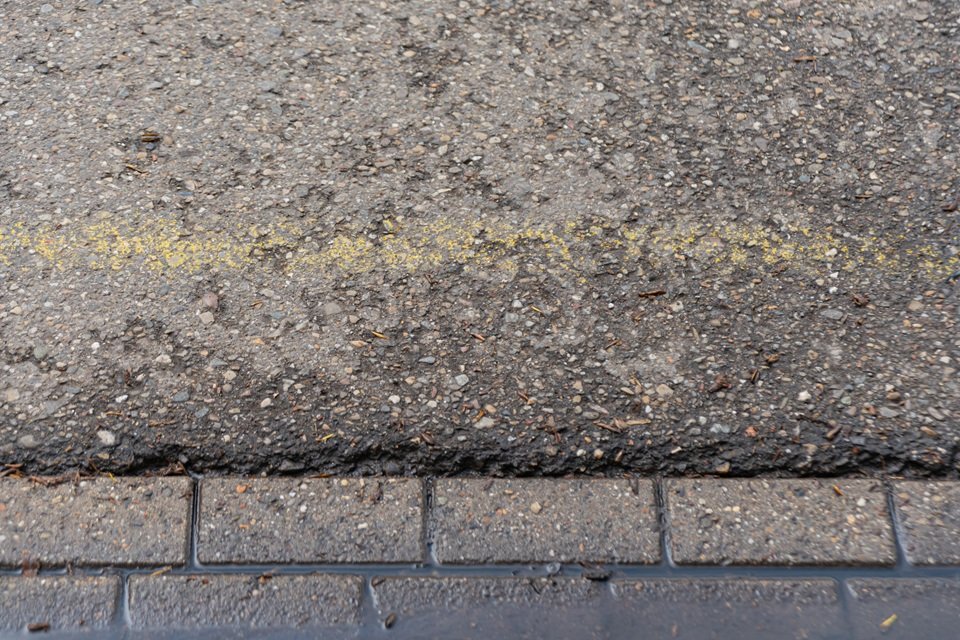
Small surface flaws often tell a bigger story about what is happening below a driveway. Cracks usually form as pavement ages, shifts, dries out, or loses support, while low spots tend to appear where the base or soil settles unevenly. Understanding the cause matters because a repair that only covers the surface may leave the real problem untouched.
Table of Contents
Water Is Often the First Problem Beneath the Surface
Rainwater can work through open cracks, worn edges, or poorly sealed joints and reach the material supporting an asphalt driveway. Once the base becomes saturated, it may lose strength under vehicle loads, allowing the pavement above it to flex more than intended.
Drainage problems also show up where downspouts empty near the pavement or the driveway lacks enough slope to move runoff away. Standing water speeds surface wear and can deepen small depressions as repeated traffic pushes against weakened material. Edge failure can begin where shoulder material washes away and leaves outer pavement unsupported.
Poor Base Compaction Can Create Trouble Years Later
Loose aggregate beneath pavement may look stable during installation but continue settling after cars begin using the surface. Uneven compaction leaves softer pockets under certain areas, which can eventually produce shallow dips, cracking, or visible wheel-path depressions.
Proper preparation requires contractors to place base material in manageable layers and compact each layer before adding more. Thick lifts are harder to compact evenly, so weak zones can remain hidden until the driveway has carried traffic through several seasons.
Why Do Freeze-Thaw Cycles Open Existing Cracks?
Cold weather can turn a hairline opening into a larger defect when water enters the pavement and freezes. Expanding ice pushes against the surrounding asphalt and base, then leaves more space behind after it melts.
Repeated cycles gradually widen damaged areas and may allow additional moisture to travel deeper into the structure. Regions with frequent temperature swings often see faster deterioration where early cracks were left open through winter.
Heavy Vehicles Can Overload a Residential Driveway
Delivery trucks, moving vans, trailers, and service vehicles place far greater stress on pavement than ordinary passenger cars. Concentrated weight can bend asphalt over a weak base and create depressions, especially near edges where structural support is lower.
Parking habits matter too because heavy loads sitting in the same place for long periods can contribute to surface indentation during hot weather. Heat softens asphalt, making weak areas more vulnerable to turning tires and parked vehicle loads. Owners expecting frequent truck traffic may need a pavement section designed with greater thickness or stronger base support.
Tree Roots & Shifting Soil Can Distort The Surface
Growing roots can lift pavement from below, while shrinking or swelling soil can move the driveway in different directions. Clay-rich ground is especially sensitive to changes in moisture and may expand during wet periods before contracting as it dries.
Nearby landscaping can affect soil moisture as mature trees draw water from the ground or irrigation keeps one area consistently wetter than another. That uneven movement can create raised cracks in one section and settlement in another.
Can Poor Drainage Cause Low Spots To Keep Returning?
Patching a depression may improve appearance without solving why that area keeps sinking. If runoff continues entering the base or water has no reliable path away, replacement material can settle again under normal use.
Correcting the grade, repairing drainage, or rebuilding weakened base layers may be necessary before resurfacing makes sense. People comparing concrete companies near me should ask similar drainage questions because both concrete and asphalt depend on stable support and controlled water movement.
Age, Sunlight, & Surface Wear Eventually Reduce Flexibility
Oxidation slowly makes asphalt harder and less flexible as the pavement is exposed to air and sunlight. Brittle material cannot adjust as easily to small movements below the surface, so cracks begin appearing where stress becomes concentrated. Inspection can separate cosmetic cracking from movement caused by settlement, moisture, or weak support.
Maintenance decisions can influence how quickly that damage spreads, but they cannot compensate for a failing foundation. Early diagnosis helps owners repair the source before small defects reach a larger area. Property owners researching concrete contractors near me may also want to compare whether repair, asphalt replacement, or concrete reconstruction better fits the site conditions, traffic level, and long-term plans. Pros LLC can evaluate cracking, low areas, drainage, and base stability to help determine whether an asphalt or concrete solution makes the most practical sense for the property.