
Key Takeaways:
- Breathing trouble, collapse, seizures, major bleeding, poisoning, and sudden weakness require urgent veterinary guidance.
- Pets can hide pain, so rapid changes in behavior, movement, breathing, or gum color should not be dismissed.
- First aid is meant to protect a pet during transport, not replace an examination or diagnosis.
- Miami pet owners can save valuable time by keeping emergency contacts, records, a carrier, and basic supplies ready.
From humid summer walks to busy roads, waterways, and sudden storms, Miami creates everyday situations where a pet can become ill or injured quickly. Knowing when to contact an emergency vet Miami can help owners make a clear decision when a dog or cat needs immediate care.
An emergency does not always look dramatic. A quiet pet after a fall, a cat repeatedly entering the litter box without producing urine, or a dog that cannot settle may need urgent attention. When in doubt, call a veterinary professional and describe exactly what happened, when it started, and what symptoms you see.
Table of Contents
1. Why Fast Action Matters
Problems involving breathing, circulation, the brain, severe pain, or blood loss can worsen without warning. Pets may also react to fear or pain by hiding, becoming unusually still, or resisting handling. Waiting to see whether symptoms pass may delay treatment after a collision, toxin exposure, heat illness, or other serious event.
Basic first aid can make transport safer, but it is not a substitute for veterinary care. Its purpose is to reduce immediate risk, keep the pet as calm as possible, and help the veterinary team take over quickly after arrival.
2. Clear Signs Of A Pet Emergency
Call an emergency veterinary service and prepare to leave immediately if your pet has any of the following signs:
- Difficulty breathing, gasping, persistent choking sounds, or blue, gray, or purple gums.
- Collapse, fainting, unresponsiveness, or an inability to stand.
- A first seizure, repeated seizures, or a seizure that does not stop promptly.
- Heavy bleeding, major trauma, a bite wound, a vehicle accident, or a serious fall.
- Repeated vomiting or diarrhea with weakness, pain, or signs of dehydration.
- Known or suspected poisoning, including medication, cleaners, food, or plants.
- Straining to urinate, especially in a male cat.
- A swollen abdomen paired with retching, weakness, restlessness, or distress.
3. Subtle Warning Signs That Need Attention
Not every urgent condition begins with an obvious crisis. Sudden hiding, confusion, unusual aggression, rapid breathing at rest, pale gums, stumbling, a dragged limb, eye injury, or an abrupt loss of appetite with pain or vomiting can all justify a same-day call. One mild symptom may not always be an emergency, but multiple symptoms or a sudden change in a young, older, or medically fragile pet deserves faster attention.
4. What To Do First
- Move your pet away from traffic, standing water, heat, chemicals, or another immediate danger if it is safe to do so.
- Check whether the pet is responsive and breathing normally, but avoid excessive handling.
- Call the emergency clinic while another person prepares the vehicle, carrier, leash, or blanket.
- Follow the clinic’s instructions instead of relying on social media or home remedies.
- Keep the pet quiet and limit movement, particularly after a fall, collision, or possible spinal injury.
- Do not force food, water, medication, or walking.
5. How To Respond To Common Emergencies
Poisoning
Remove your pet from the substance if you can do so safely, then save the package, label, plant sample, or medication container. Call a veterinarian promptly. Do not induce vomiting or give a home treatment unless a veterinary professional specifically directs you to do so.
Heat-Related Illness
Miami heat and humidity can make overheating a serious concern. Move the pet to air conditioning or shade, begin gentle cooling with cool or room-temperature water, and seek veterinary care right away. Avoid ice baths. The warning signs of heat-related illness can include heavy panting, drooling, weakness, vomiting, diarrhea, or confusion.
Severe Bleeding
Apply steady, direct pressure with clean gauze or a cloth. If blood soaks through, add another layer rather than pulling away the first one. Heavy bleeding, a deep wound, or bleeding after trauma requires immediate veterinary care.
Choking Or Breathing Trouble
Keep the pet calm and seek emergency care immediately. Do not put your fingers deep into the mouth of an awake, frightened animal, and do not risk pushing an object farther into the throat.
6. How To Transport An Injured Pet
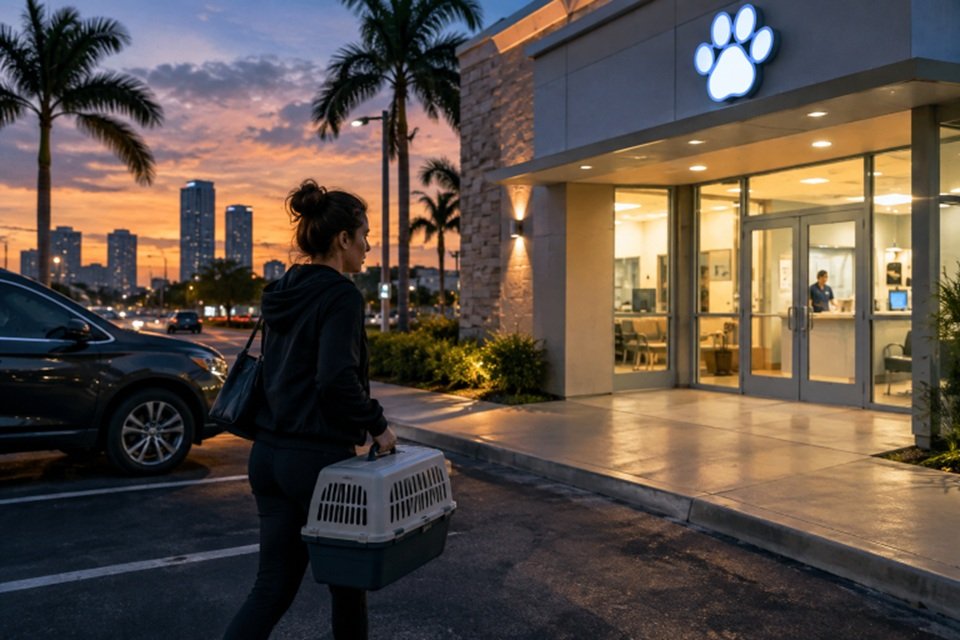
A frightened or painful pet may bite, scratch, or struggle even if normally gentle. Use a carrier for cats and small pets. For a larger dog, a thick blanket, firm board, or other flat support can help reduce twisting during movement. Support the head, neck, and back after trauma, keep the pet secured in the vehicle, and ask another person to drive when possible. Calling ahead allows the clinic to prepare for your arrival.
7. What To Bring To The Clinic
- Current medications, known allergies, and recent medical records if available.
- The regular veterinarian’s contact information.
- Packaging from a suspected toxin, medication, or unsafe food.
- Photos or video showing unusual breathing, movement, or behavior.
- A brief timeline of the incident and when symptoms began.
- Payment or pet insurance information, if applicable.
8. How Miami Pet Owners Can Prepare
Preparation is especially useful during hurricane season, flooding, power outages, and evacuation concerns. Keep your emergency clinic’s phone number and address in your phone and on paper, maintain current identification and microchip details, and practice getting pets into carriers before a crisis. A pet evacuation kit should include records, medications, water, food, towels, and a secure leash or carrier. The items recommended for a pet evacuation kit can help households plan before an emergency disrupts normal routines.
9. Mistakes To Avoid
- Waiting for symptoms to disappear after a serious accident or exposure.
- Giving human pain medication or other medicine without veterinary approval.
- Applying household chemicals, alcohol, ice, or heat to an injury without guidance.
- Forcing a frightened pet to eat, drink, walk, or accept handling.
- Transporting a pet loose in the car.
- Assuming a silent pet is comfortable or stable.
Final Thoughts
Pet emergency planning does not require advanced medical training. It requires recognizing warning signs, staying calm, avoiding risky home treatments, and contacting veterinary professionals quickly. A prepared Miami household can focus less on searching for answers during a crisis and more on getting a pet safely to care.