
Key Takeaways:
- Open and flexible layouts promote spontaneous interactions and adaptability.
- Incorporating biophilic design elements enhances well-being and creativity.
- Technology integration facilitates seamless communication and collaboration.
- Designated zones cater to diverse work styles and tasks.
- Balancing openness with privacy ensures focus and comfort.
Introduction
Fostering collaboration in the modern workplace has become a strategic priority for organizations seeking innovation and thriving teams. As companies compete in fast-paced industries, the ability to generate transformative ideas rests heavily on how effectively employees can work together. With the right office design, organizations can create an environment where teamwork, engagement, and productivity flourish. Incorporating solutions like DUMBO office rentals allows teams to benefit from adaptable spaces that evolve with their needs and support a culture of creativity. These dynamic work environments encourage interaction, break down departmental silos, and ensure that creativity flows unhindered through all levels of the organization.
Whether launching a startup or refreshing a corporate headquarters, thoughtful planning of workspace elements, such as layout, privacy options, and communal areas, boosts employee well-being and cultivates lasting workplace relationships. A well-designed office space sends a powerful message about the company’s values, demonstrating that leaders care about the comfort and happiness of their teams. Practical office design not only drives business outcomes but also affirms the value of each employee through accommodations tailored to every work style. This inclusivity fosters a sense of belonging, motivating staff to contribute their best ideas and support their colleagues’ success.
Table of Contents
Open & Flexible Layouts
Open floor plans and modular furniture arrangements are foundational elements in modern, collaborative office design, promoting flexibility, adaptability, and social interaction within the workspace. Movable partitions, stackable seating, and mobile whiteboards enable teams to reconfigure spaces on demand, supporting both spontaneous impromptu huddles and more structured, organized workshops. Flexibility in layout allows for seamless accommodating of team expansion and shifting project needs, thereby allowing the workspace to grow and evolve in tandem with the organization’s growth. This approach empowers employees to personalize and customize their immediate environment, providing a greater sense of control over their work setting that, in turn, boosts morale, engagement, and overall productivity. Research consistently shows that employees working in open layouts report higher levels of communication, collaboration, and idea sharing, which are critical drivers for organizational innovation and creative problem-solving. Such environments are especially valuable in industries where cross-functional collaboration, rapid iteration, and dynamic project execution are the norm, fostering a culture of adaptability and continuous improvement.
Biophilic Design Elements
Bringing elements of nature into the office environment through the strategic use of greenery, natural lighting, and tactile surfaces creates a calming and inviting atmosphere that significantly positively impacts employee creativity, concentration, and overall well-being. Incorporating biophilic elements, such as expansive plant walls, soothing water features, or natural wood finishes, not only enhances aesthetic appeal but also promotes cognitive restoration, reduces workplace stress, and improves mental health. Simple additions like potted plants, natural textiles, and carefully selected natural materials can make a profound and lasting difference in employees’ mood, energy levels, and overall productivity. Extensive research indicates that exposure to biophilic design principles is strongly linked to improved mood, increased motivation, and higher work output, making it a highly valuable addition to any collaborative or individual office setting. These positive effects are further amplified when natural elements are visible from multiple areas within the workspace, ensuring that all employees, regardless of their specific work zone or position, can benefit from the restorative power of nature, leading to a healthier, happier, and more productive workplace environment.
Technology Integration
Collaboration today often extends beyond physical offices, making seamless technology integration essential. Equipping meeting areas with high-speed Wi-Fi, video conferencing tools, and digital collaboration platforms ensures inclusive and frictionless communication among both local and remote team members. In addition to basics like reliable internet, consider interactive displays and wireless presentation tech that streamline group ideation and content sharing. Charging stations and device connectivity hubs further support productivity, eliminating barriers to participation. These upgrades empower teams to innovate and interact no matter where employees are located, closing gaps between in-person and virtual collaboration so everyone remains engaged, focused, and creative.
Designated Collaborative Zones
Strategically designed zones for teamwork and collaboration signal the high value an organization places on collective problem-solving and innovative thinking. Brainstorming rooms adorned with writable walls encourage spontaneous idea generation, while project rooms equipped with advanced tools facilitate hands-on prototypes and iterative development. Casual breakout spaces provide relaxing settings where employees can unwind and engage in informal discussions, fostering camaraderie. These thoughtfully designated areas enable employees to gravitate to the most suitable location for each phase of their work, whether focused, creative, or collaborative. By purposefully demarcating these distinct zones, organizations effectively reduce the noise and disruption commonly found in open office environments, while still supporting dynamic and creative interactions. These collaborative spaces separate focus-intensive tasks from team activities, minimizing distractions and empowering teams to perform at their best. Well-defined and versatile collaborative zones cultivate a sense of excitement and pride around teamwork, inspiring more frequent, meaningful engagement among colleagues and strengthening organizational culture overall.
Balancing Openness With Privacy
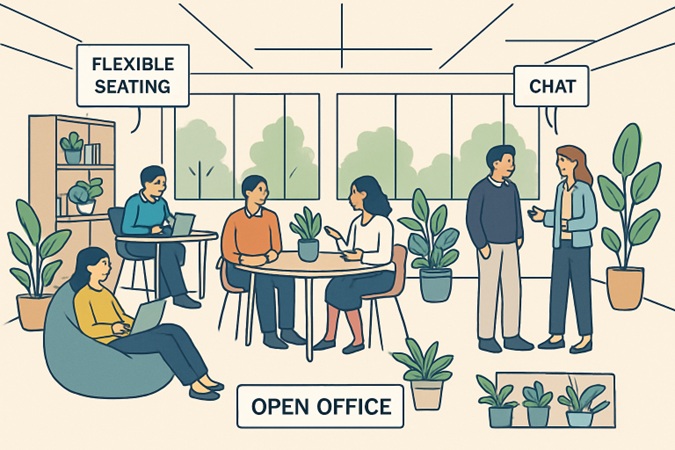
While openness spurs creativity, employees also need private pods or quiet rooms to concentrate, recharge, or work through complex problems. Offering a range of work settings, from open lounge areas to enclosed booths, respects individual work styles and maximizes overall productivity. Thoughtful design, such as the use of glass partitions and sound-mitigating materials, helps create a sense of enclosure without sacrificing visual connectivity between employees. Employees benefit from being able to glide between collaborative and focused work as the day demands, supporting a harmonious and supportive work environment where all personalities can succeed.
 Acoustic Privacy Solutions
Noise is a constant challenge in vibrant, lively, and highly collaborative workplaces, where open spaces and shared environments are designed to foster teamwork and innovation. Investing in a variety of sound-absorbing ceiling tiles, privacy pods, acoustic wall panels, and soft flooring options can significantly and effectively reduce distracting noise levels, thereby creating a more balanced environment that is both energetic and serene. Implementing quiet areas or zones with specialized acoustic treatments makes it easier for employees to participate actively and confidently in meetings and brainstorming sessions, knowing they can easily retreat to a quiet space when complex, deep thinking or sensitive discussions are required. Addressing acoustics thoughtfully not only improves concentration and focus but also supports overall employee well-being, reduces stress levels, and enhances speech privacy during confidential or sensitive conversations. A well-designed acoustic environment often goes unnoticed until it is missing or inadequate, which reminds us just how fundamental and essential good acoustic design is to overall office comfort, productivity, and employee satisfaction.
Personalization & Customization
Empowering employees to personalize their workstations significantly helps foster a strong sense of belonging and ownership within the organization. Providing options such as adjustable desks, ergonomic chairs, and customizable monitor arms enables employees to tailor their work environment to meet their individual needs for comfort, health, and efficiency. Allowing some degree of freedom in decorating or organizing personal work areas serves as an easy yet powerful signal of trust and autonomy from the employer to the employee. Companies that actively involve their teams in decisions about color schemes, décor choices, and space planning tend to benefit from higher employee retention rates and a more engaged, motivated workforce. Personalization is an accessible and effective strategy for boosting morale, job satisfaction, and commitment among team members, with positive effects that extend far beyond mere aesthetics and deeply influence the fundamental sense of ownership, pride, and connection employees feel towards their work environment.
Community & Social Interaction Spaces
Dedicated communal areas, like coffee bars, lounges, or multipurpose event spaces, are the heart of social interaction in the office. These spaces provide natural opportunities for informal collaboration, peer recognition, and idea sharing outside structured meetings. In many workplaces, the greatest relationships and ideas are formed while sharing a casual conversation over coffee or during a team celebration in a multi-use common space. Creating environments for casual encounters strengthens relationships and can lead to serendipitous innovation, reinforcing the company’s collaborative culture. A commitment to meaningful social space underlines how community and creativity are truly interlinked in the best office settings.
In today’s rapidly evolving business landscape, collaborative workspace strategies are vital for empowering modern teams. Incorporating open, flexible layouts, natural influences, advanced technology, and thoughtful privacy options creates an ecosystem where collaboration, creativity, and community thrive. By investing in these elements, organizations not only improve their physical environment but also set the foundation for a resilient and innovative culture that inspires current and future talent.

