
Table of Contents
The Core Building Blocks Of Reliable Infrastructure
We often don’t think about infrastructure until it fails. Yet, the unseen backbone of our modern world—from the apps on our phones to the bridges we cross—is constantly working to keep things running smoothly. This constant, dependable operation is what we call reliable infrastructure, and its importance cannot be overstated. It ensures our businesses stay online, our communities remain connected, and our daily lives proceed without disruption.
In this guide, we will explore what truly makes infrastructure reliable. We’ll delve into the foundational building blocks, whether we’re talking about the digital systems powering our cloud applications or the physical structures supporting our cities. We’ll also look at how we measure reliability, the financial costs of downtime, and the cutting-edge strategies used to build systems that can withstand challenges. From the resilience needed for a smoothly functioning residential garage door to the complex engineering behind major civil construction projects, understanding reliability is key to a future that works.
 Reliable infrastructure, whether digital or physical, is built upon fundamental principles designed to withstand disruptions and ensure continuous operation. At its heart are concepts like failure domains, which are isolated groups of resources that can fail independently without impacting others. In cloud computing, providers like Google Cloud structure their global infrastructure into regions and zones. Regions are geographically distinct locations, while zones are independent failure domains within a region, each with its own power, cooling, and networking. This design ensures that an issue in one zone or region doesn’t bring down an entire application.
When we consider digital infrastructure, resources can be broadly categorized by their location scope:
- Zonal Resources: These are services or components deployed within a single zone. Examples include individual virtual machines (VMs) in Google Compute Engine, zonal managed instance groups (MIGs), or single-zone Kubernetes Engine clusters. While zonal resources offer good performance, they are susceptible to outages affecting that specific zone.
- Regional Redundancy: To enhance reliability, applications often leverage multiple zones within a single region. By distributing workloads across different zones, a failure in one zone can be mitigated by traffic rerouting to healthy zones. This approach provides a significant uplift in availability compared to a single-zone deployment. Services like Google Cloud SQL instances, when configured for high availability, operate across multiple zones within a region.
- Multi-Regional Distribution: For the highest levels of resilience, critical applications are deployed across multiple distinct geographic regions. This protects against region-wide disasters, such as large-scale natural calamities. Global resources, such as global load balancers, can intelligently route traffic to the nearest healthy region, providing seamless failover. However, managing changes to global resources requires extreme care, as a misconfiguration can become a single point of failure affecting users worldwide.
The same principles of distribution and redundancy apply to large-scale physical infrastructure. Consider the extensive networks of roads, bridges, and utilities that crisscross our nations. Just as cloud providers design for failure domains, civil engineers plan for diverse routes, backup power systems, and redundant communication lines to ensure continuity. For instance, the development of robust subsea cables, like the Marea cable connecting Virginia to Spain, exemplifies how critical physical infrastructure is designed with redundancy and resilience in mind, often rerouted to avoid hurricane-prone areas. These robust and diverse networks are essential for providing truly Reliable infrastructure solutions, ensuring that if one path fails, others can take over.
Here’s a comparison of how different deployment scopes impact infrastructure availability:
Deployment Scope Target Availability (Example) Maximum Downtime (in a 30-day month) Key Benefit Zonal 99.9% 43.2 minutes Cost-effective for less critical workloads, low latency within a zone. Regional (Multi-Zone) 99.99% 4.3 minutes Resilience against single zone failures, higher availability within a region. Multi-Regional 99.999% 26 seconds Highest resilience against region-wide outages, disaster recovery capabilities. Quantifying Resilience And The Cost Of Downtime
Downtime is not just an inconvenience; it carries a substantial financial burden. The average cost of IT downtime is estimated at $5,600 per minute, with hourly costs ranging from $140,000 to $540,000. For a financial institution, a failed upgrade that resulted in four hours of downtime reportedly cost an estimated $2.5 million per hour. These figures underscore why quantifying resilience and understanding the potential costs of failure are paramount for any modern business.
The reliability of a complex system, especially one with multiple interdependent components, is often expressed through its aggregate availability. This is calculated as the product of the availabilities of each individual component or tier. For example, if we have a three-tier application where each tier independently achieves 99.9% availability, the aggregate availability of the entire stack would be 99.9% * 99.9% * 99.9% = 99.7%. This seemingly small reduction translates to a significant increase in potential downtime, highlighting how stack depth can negatively impact overall reliability. Deeper infrastructure stacks inherently reduce overall availability due to the increased number of potential failure points.
To manage and guarantee these levels of performance, Service Level Agreements (SLAs) are crucial. These formal commitments between a service provider and a customer define the expected level of service, often including availability targets, performance metrics, and responsibilities. Cloud providers, for instance, offer various SLAs for their services, which can guide architectural decisions. For example, Azure offers 99.99% monthly compute availability for zone-redundant virtual machines, and an astonishing 99.99999999999999% (11 nines) annual object durability for geo-zone-redundant storage.
Measuring Success Through Reliable Infrastructure Targets
Reliability is often measured through availability metrics, frequently expressed as “nines” in a percentage. For instance:
- Three Nines (99.9%): Allows for approximately 43.2 minutes of downtime in a 30-day month.
- Four Nines (99.99%): Reduces downtime to about 4.3 minutes per month.
- Five Nines (99.999%): Limits downtime to a mere 26 seconds per month.
These targets are not arbitrary; they reflect a business’s tolerance for disruption and the financial implications of outages. Achieving higher “nines” typically requires more sophisticated architecture, redundancy, and operational practices, which come with increased costs.
Beyond simple uptime percentages, reliability also encompasses other critical performance indicators. These can include the proportion of successful requests out of a total, data correctness for applications, consistent throughput and low latency for data pipelines, and durability for storage systems. For example, Google Cloud’s Bigtable offers different SLAs based on its configuration, ranging from 99.9% for a single cluster to 99.999% for multi-regional deployments. Defining these workload-specific indicators helps organizations set realistic reliability objectives that align with user expectations and business needs.
Engineering For High Availability & Fault Tolerance
Designing for high availability and fault tolerance is about proactively building systems that can withstand failures and continue operating. This involves several key strategies:
- Redundancy: Eliminating single points of failure by duplicating critical components. If one component fails, its redundant counterpart takes over seamlessly. This can be applied at various levels, from redundant power supplies in a server to entire replicated data centers.
- Horizontal Scaling: Instead of relying on a single, powerful machine, distributing workloads across many smaller, interchangeable units. This allows systems to handle increased load by adding more units and ensures that the failure of one unit doesn’t cripple the entire system.
- Graceful Degradation: Designing systems to continue functioning, albeit with reduced capacity or features, during partial failures. This prioritizes core functionalities to maintain some level of service rather than a complete outage.
- Disaster Recovery (DR): Establishing comprehensive plans and capabilities to restore critical business functions and data after a catastrophic event. This includes regular testing, such as Google’s annual company-wide Disaster Recovery Testing (DiRT) events, to ensure that recovery procedures are effective. Azure Site Recovery is another example, offering regional failover capabilities for applications.
- Resource Replication: Continuously copying data and application states to multiple locations or instances. This ensures that if a primary resource becomes unavailable, a replica can quickly take its place, minimizing data loss and downtime.
These engineering principles are crucial for both cloud-based applications and physical infrastructure, ensuring that essential services remain operational even when faced with unexpected challenges.
Designing For Reliable Infrastructure In Residential & Commercial Spaces
While often discussed in the context of large-scale IT systems or civil engineering, the concept of reliable infrastructure extends even to our homes, particularly with critical entry points like garage doors. A garage door, often the largest moving part of a house, is a vital component of residential security and convenience. Its reliability directly impacts daily life and safety.
For instance, ensuring the security of this entry point requires attention to common vulnerabilities. The emergency release cable, designed for manual operation during power outages, can be exploited by burglars using simple tools like a coat hanger. Solutions include securing the release with zip ties or installing specialized shields. Older garage door openers, lacking rolling code technology, are also susceptible to code-grabbing, making an upgrade to a smart opener a key reliability enhancement.
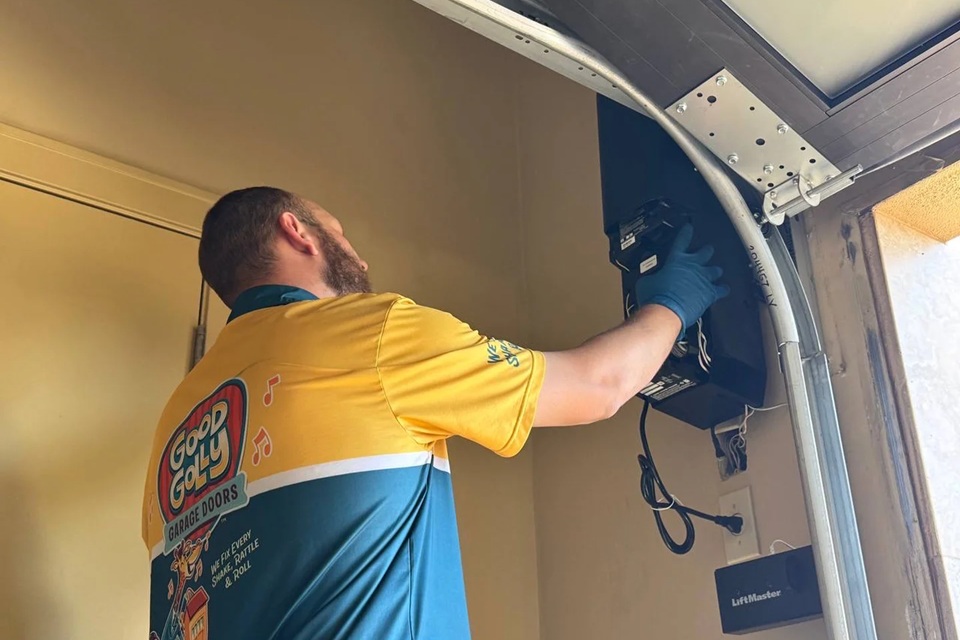
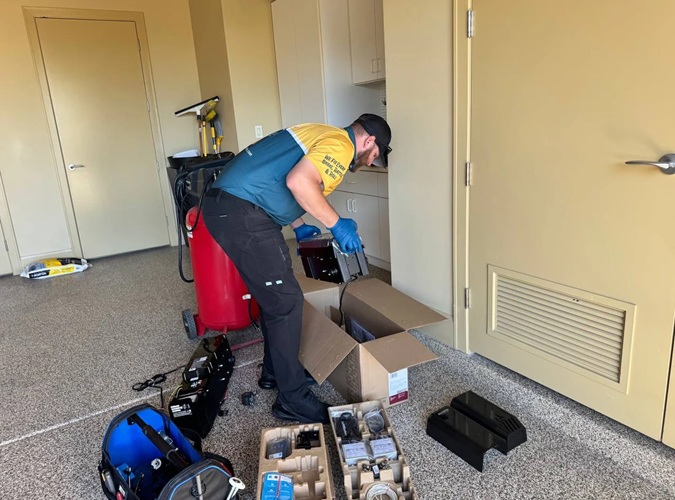
Smart monitoring systems offer significant improvements in garage door reliability and security. Features like real-time alerts notify homeowners of unexpected activity, while remote monitoring allows them to check and control their door from anywhere. Automated alerts can signal if the door has been left open for too long, and integration with Wi-Fi cameras provides visual confirmation of who is entering or exiting. For any issues with these advanced systems, or for general maintenance to keep your garage door operating dependably, seeking out experts in Reliable Liftmaster repair Spring Valley can ensure your home remains secure and accessible. Regular maintenance, much like for any complex system, is essential to prevent unexpected failures and ensure long-term reliability.
Advanced Technologies Enhancing System Stability
The pursuit of reliable infrastructure is continuously advanced by innovative technologies that enable better prediction, prevention, and recovery from failures.
Observability is a cornerstone of modern reliability engineering. It involves collecting and analyzing data from systems—including metrics, logs, and traces—to understand their internal states and predict potential issues. Comprehensive observability allows teams to quickly detect anomalies, diagnose root causes, and respond effectively before minor issues escalate into major outages.
Automated recovery mechanisms are designed to self-heal systems. Instead of manual intervention, these systems can automatically detect failures, isolate faulty components, and initiate recovery actions, such as restarting services, failing over to redundant instances, or scaling resources. This significantly reduces Mean Time To Recovery (MTTR) and minimizes human error.
Infrastructure-as-Code (IaC) has revolutionized how digital infrastructure is provisioned and managed. By defining infrastructure components (servers, networks, databases) in code, organizations can ensure consistency, reproducibility, and version control. This eliminates manual configuration errors and enables rapid, reliable deployments. However, even IaC generated by large language models (LLMs) can introduce errors or policy violations. This is where cutting-edge approaches like Multi-agent AI systems come into play. For example, MACOG (Multi-Agent Code-Orchestrated Generation) is an architecture that uses specialized LLM agents collaborating to generate complex and reliable Terraform configurations. These agents, with roles like Architect and Engineer, work together, validate their outputs, and even enforce policies using tools like Terraform Plan and Open Policy Agent (OPA), significantly improving the reliability of LLM-generated IaC.
Another powerful application of AI in reliability is demonstrated by initiatives like Project Narya. This project, developed by Azure, uses machine learning to predict hardware failures in virtual machines. By analyzing telemetry data, Project Narya can anticipate potential issues, proactively mitigate them, and even adjust its models based on feedback, leading to a significant reduction in VM interruptions—by as much as 26% on average.
Finally, Safe Deployment Practices (SDP) are crucial for managing change, which is a primary cause of service reliability issues. SDP involves a phased approach to rolling out updates, typically starting with a small subset of users or infrastructure and gradually expanding. AI-driven SDPs, such as Azure’s “Gandalf” system, monitor health metrics at scale during these deployments, automatically halting rollouts if performance degrades. This ensures that changes are introduced cautiously, minimizing the risk of widespread outages and maintaining system stability.
Frequently Asked Questions About Reliable Infrastructure
What is the difference between availability and resilience?
While often used interchangeably, availability and resilience refer to distinct aspects of reliable infrastructure. Availability is the measure of a system’s uptime—the percentage of time it is operational and accessible to users. It focuses on maintaining continuous service under normal operating conditions. For example, a system with “four nines” availability (99.99%) is operational for all but about 4.3 minutes per month.
Resilience, on the other hand, is a system’s ability to withstand and recover from failures, disruptions, or unexpected events while maintaining an acceptable level of performance. It’s about how well a system can adapt to adverse conditions, absorb shocks, and return to full functionality. A resilient system might experience a temporary dip in availability during a failure but can quickly self-heal or failover to a redundant component, preventing a prolonged outage. Availability is about being up; resilience is about staying up or getting back up quickly when things go wrong.
How does stack depth affect the overall reliability of a system?
The “stack depth” refers to the number of interdependent layers or components in an infrastructure or application architecture. Each layer, from the network to the database to the application logic, has its own inherent availability. The overall, or aggregate, reliability of the entire system is a function of the reliability of all its constituent parts.
Mathematically, if you have multiple components in series, the aggregate availability is the product of their individual availabilities. For example, if a system has three tiers, and each tier has a 99.9% availability, the overall system availability would be 0.999 * 0.999 * 0.999 ≈ 0.997, or 99.7%. This means that as the number of interdependent layers increases, the overall reliability of the system tends to decrease, assuming no redundancy within each layer. A deeper stack introduces more potential points of failure, making it more challenging to achieve high aggregate availability without robust redundancy and fault tolerance at each level.
Why is redundancy essential for modern civil and digital systems?
Redundancy is fundamental to achieving high reliability in both civil and digital infrastructure because it eliminates single points of failure. It means having backup components, systems, or pathways that can take over if a primary one fails.
For digital systems, redundancy manifests as:
- Replicated servers: Multiple instances of an application running simultaneously.
- Multi-zone deployments: Distributing workloads across different physical locations within a region.
- Backup power supplies: Ensuring servers and network equipment remain operational during power outages.
- Data replication: Storing copies of data in multiple locations to prevent loss.
In civil construction and physical infrastructure, redundancy is equally vital:
- Multiple routes: Having alternative roads, bridges, or railway lines to bypass disruptions.
- Redundant utility lines: Separate water pipes, power grids, or communication cables to ensure service continuity.
- Backup generators: Providing emergency power for critical facilities like hospitals or emergency services.
- Structural overdesign: Building structures with a safety margin that can withstand loads greater than typically expected.
Without redundancy, the failure of a single component can lead to a complete system outage, with potentially severe consequences ranging from financial losses in digital services to safety hazards and widespread disruption in civil infrastructure. It’s a proactive strategy to ensure continuous operation and rapid recovery.
Conclusion
The concept of reliable infrastructure is far more encompassing than it might initially appear. It is the invisible scaffolding that supports our digital lives and physical communities, ensuring everything from our residential garage doors operate smoothly to global financial institutions remain online. Its importance is underscored by the staggering costs of downtime, which can quickly erode profits and damage reputations.
Achieving true reliability requires a multi-faceted approach, encompassing foundational building blocks like geographically distributed failure domains, sophisticated engineering for fault tolerance and graceful degradation, and the strategic deployment of redundancy at every level. Furthermore, modern advancements in observability, automated recovery, and AI-driven Infrastructure-as-Code are continuously pushing the boundaries of what’s possible, allowing us to build systems that are not just robust, but intelligent and self-healing.
Reliability is a shared responsibility, demanding a proactive mindset and continuous investment from individuals, businesses, and governments alike. By prioritizing robust design, meticulous planning, and ongoing maintenance, we can ensure business continuity, enhance user experience, and build a future founded on long-term stability and unwavering dependability.