

Key Takeaways:
- Predictive maintenance can reduce unplanned machine downtime by up to 50%.
- Automation in IT operations leads to measurable uptime gains exceeding 30%.
- AI-driven monitoring improves accuracy and real-time decision-making.
Reducing downtime is a top priority for modern businesses navigating a fast-paced digital landscape. Even a brief interruption can ripple throughout an organization, halting workflows, draining revenue, and frustrating employees and customers alike. By implementing innovative IT solutions, companies can take proactive measures to minimize disruptions and sustain high productivity. With the expertise of technology partners like Elevate Services Group Denver, organizations are leveraging innovations to keep their operations running smoothly and efficiently.
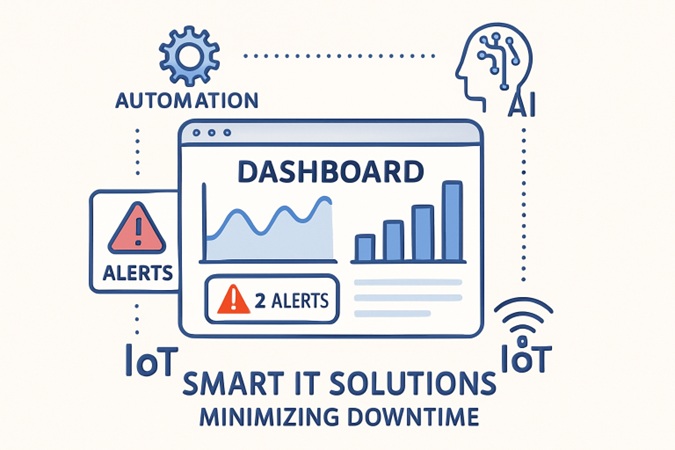
Modern IT environments benefit from factual solutions that combine predictive analytics, automation, artificial intelligence, and the Internet of Things (IoT). These technological advances not only reduce the risk of unplanned outages but also streamline daily operations, empower employees, and bolster the company’s bottom line. Proactive management and targeted automation set the stage for a culture of continuous improvement, making IT an engine for sustainable growth rather than a potential obstacle.
Across industries, the cost of downtime is measured in lost hours, missed opportunities, and significant remediation expenses. By adopting intelligent IT strategies, businesses minimize exposure to these risks and achieve a more reliable, optimized, and future-ready operation. This focus on uptime and efficiency pays dividends in productivity, employee and customer satisfaction, and financial performance.
Organizations are increasingly turning to technology that anticipates problems and solves them before they escalate. This shift reflects an understanding that investment in smart IT is not only a matter of convenience but of necessity in a data-driven world.
Table of Contents
 Understanding The Impact Of Downtime
Downtime is a costly event for any business, with potential losses reaching five-figure sums per hour according to industry research cited by PR Newswire. These losses go beyond immediate productivity and revenue drop-offs and often include compliance risks, customer churn, and increased labor costs for urgent recovery and mitigation. In sectors that depend heavily on uninterrupted systems, such as finance, healthcare, and manufacturing, even short periods of downtime can erode trust and damage reputations.
According to a Forbes report, the true cost of IT downtime extends beyond lost output. Businesses face disruption to workflows, delayed projects, missed partnerships, and the consistent threat of being outpaced by more agile competitors. This makes resilience and efficient recovery as important as day-to-day uptime.
Implementing Predictive Maintenance
Predictive maintenance uses IoT sensors and artificial intelligence to analyze equipment health and alert teams before failures occur. By continuously monitoring performance data, businesses can schedule maintenance far more effectively, replacing reactive repairs with preemptive interventions. Studies highlight that this strategy can decrease unplanned downtime by up to 50%, boost maintenance productivity by 55%, and reduce total maintenance expenses by around 40%. These results put predictive maintenance at the heart of any modern IT solution, especially for organizations managing fleets of devices, networks, and infrastructure.
Case Study: Predictive Analytics In Action
An example from Samsung Insights details how predictive maintenance enables enterprises to anticipate breakdowns, avoid costly outages, and extend equipment life. By leveraging real-time data and trend analysis, businesses make better decisions on repair schedules and resource allocation, preventing major disruptions before they manifest.
Leveraging Automation In IT Operations
Automation within IT operations is transforming how issues are detected and resolved. Automated systems monitor networks for abnormalities and initiate instant alerts or resolutions using predefined protocols. This significantly reduces the mean time to repair and the workload on IT staff, freeing them to focus on value-added projects. According to research, many organizations have witnessed uptime improvements of more than 30% after implementing robust IT process automation and adaptive patch management workflows.
The integration of smart ticketing, automated backup routines, and self-healing scripts allows IT environments to run more reliably. These tools reduce human error and maintain consistency and security throughout all levels of infrastructure. Automation also sets the stage for scalable growth, accommodating expanding business needs without linear increases in support costs or risks.
Enhancing Field Service Efficiency With AI
Artificial intelligence is bringing new efficiency to field service management. AI-powered platforms analyze service requests in real time, optimize scheduling, and match the right technician to each job based on skills and proximity. This targeted approach shortens response times and increases the rate of first-visit resolution. Industry reports show that businesses using AI-driven field service management enjoy substantial reductions in travel time, lower operating expenses, and elevated customer satisfaction ratings.
According to insights published by the Business Insurance Index, AI-driven scheduling turns field teams into a strategic advantage, minimizing inefficiencies and delays while ensuring critical issues receive prompt attention and resolution.
Utilizing IoT For Remote Monitoring
The rise of IoT technologies has unlocked powerful capabilities for remote monitoring across a vast range of equipment and systems. IoT sensors continually feed performance and condition data back to centralized dashboards, empowering IT and maintenance teams to identify anomalies early. Studies have shown that introducing IoT-enabled monitoring reduces machine downtime by 22% and improves resource utilization by 15%, underscoring the direct impact on productivity and cost control.
By deploying IoT, organizations also enable predictive capabilities across distributed assets. This allows them to catch service needs, potential hazards, or performance issues regardless of physical location, a crucial benefit in industries with geographically dispersed facilities.
Implementing Workflow Automation
Beyond infrastructure and equipment, workflow automation enhances productivity by streamlining repetitive tasks such as reporting, communications, and administrative processing. When these processes are automated, staff are freed to focus on higher-priority work that drives innovation and customer value. Custom automation tools, from auto-generating analytics reports to intelligent email routing, can save businesses substantial hours each week.
According to 7tech.com, companies that prioritize workflow automation not only reduce costs but also improve employee morale, reduce turnover, and foster a culture that enables teams to adapt rapidly to changing business demands.
Conclusion
Investing in innovative IT solutions, including predictive maintenance, automation, AI-driven monitoring, and IoT-enabled systems, yields transformative reductions in downtime and significant gains in productivity. These advances help organizations take charge of their operations, proactively address potential risks, and position themselves for ongoing success in a rapidly evolving business landscape. The integration of these technologies ensures reliability, resilience, and a measurable return on investment for forward-thinking businesses.