
Table of Contents
Defining The Core: Transportation & Logistics
From the coffee we drink to the packages arriving at our door, movement is constant. Yet, the intricate systems that make this possible often go unnoticed. We are talking about the vast world of transportation and logistics.
This sector is the engine of global commerce and personal mobility. It ensures that goods reach their markets and people arrive at their destinations, whether across oceans or just down the street. Understanding its complexities is vital for businesses and individuals alike.
In this extensive guide, we will explore the fundamental differences between transportation and logistics. We will delve into their key components and examine the cutting-edge technologies shaping their future. We will also look at practical examples, from managing international freight to facilitating smooth local journeys, like those offered by Kilimanjaro airport transfers. We’ll also cover the essential role of risk management in keeping everything on track.
Join us as we unpack this crucial industry, revealing how its efficiency impacts our daily lives and the global economy.
At first glance, the terms “transportation” and “logistics” might seem interchangeable, but they represent distinct, albeit interconnected, functions within the broader supply chain. Understanding this fundamental difference is crucial for optimizing operations and achieving strategic objectives.
 Distinguishing Movement From Management
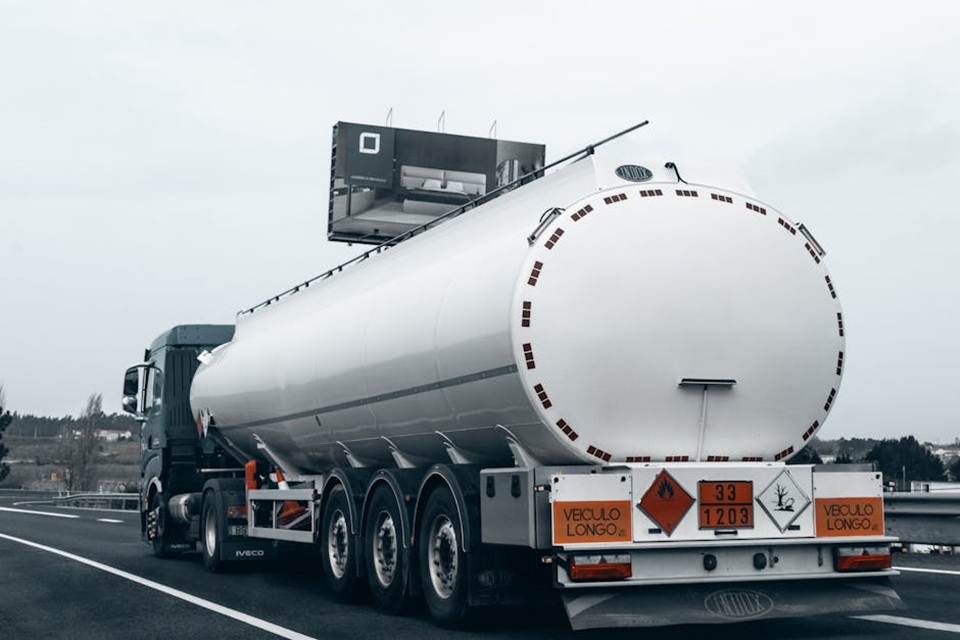
Transportation is the physical movement of goods or people from one point to another. It involves the actual act of conveying items using various modes like trucks, ships, planes, or trains. Its primary focus is on the efficient and timely delivery of cargo or passengers. While essential, transportation is just one piece of a much larger puzzle.
Logistics, on the other hand, is the overarching process that manages the entire flow of resources, from the point of origin to the point of consumption. It encompasses a wide array of activities beyond just physical movement. Logistics involves strategic planning, coordination, and execution to ensure that goods, services, and information move efficiently and effectively. This includes everything from the acquisition of raw materials to the final delivery of products to customers. The goal of logistics is to optimize the entire process, reducing costs, improving efficiency, and enhancing customer satisfaction.
To illustrate this, consider a simple comparison:
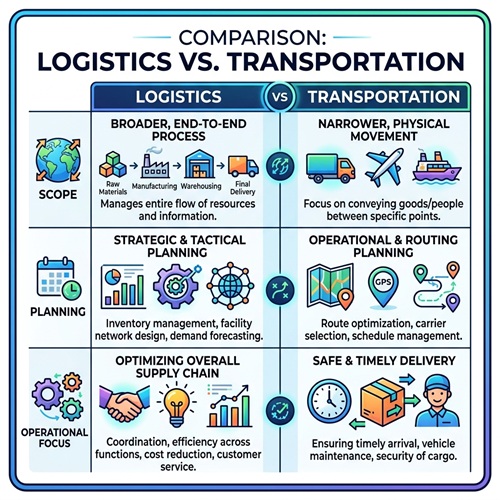 Logistics is about the “how, when, where, and why” of moving things, while transportation is simply the “what” and “by what means” of the movement itself. Without a robust logistics framework, transportation efforts can be disorganized, leading to inefficiencies, increased costs, and missed deadlines.
Key Components Of Modern Logistics
Modern logistics is a complex, multi-faceted discipline that integrates various components to create a seamless supply chain. Beyond transportation, these components include:
- Inventory Management: This involves overseeing the storage, ordering, and control of goods. Effective inventory management ensures that products are available when needed without excessive holding costs. It balances supply and demand to prevent stockouts or overstock.
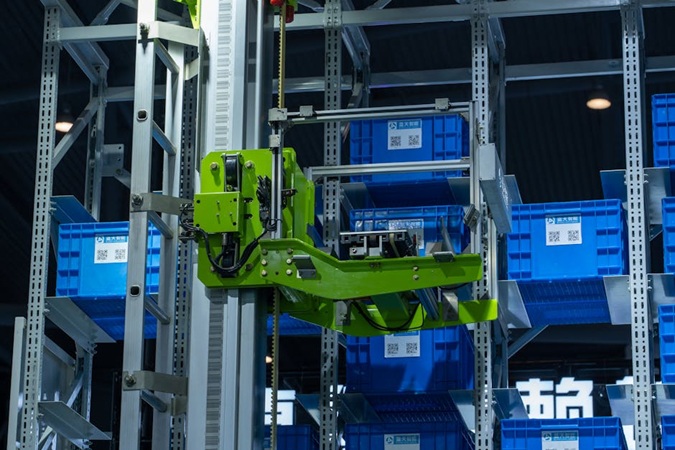
- Warehousing: This component deals with the storage and handling of goods within facilities. It includes activities like receiving, putaway, picking, packing, and shipping. Modern warehouses often employ advanced sorting technology and automation to enhance efficiency.
- Material Handling: This refers to the short-distance movement of materials within a facility or between a facility and a transport vehicle. It focuses on minimizing damage and maximizing space utilization.
- Packaging: Beyond protecting goods during transit, packaging in logistics also considers factors like ease of handling, storage efficiency, and compliance with international shipping regulations.
- Customs Clearance: For international shipments, navigating complex customs regulations, tariffs, and documentation is a critical logistics function. This ensures legal compliance and prevents delays at borders.
- Demand Forecasting: Predicting future customer demand is vital for optimizing inventory levels, production schedules, and transportation capacity. Accurate forecasting minimizes waste and improves responsiveness.
- Data Flow and Information Management: The efficient flow of information is as crucial as the flow of goods. This includes tracking shipments, managing orders, and analyzing performance data to make informed decisions.
These components work in concert to create a resilient and responsive supply chain, ensuring that products are not just moved, but moved intelligently and strategically.
The Mechanics Of Modern Movement & Risk Management
The physical movement of goods and people relies on a diverse array of transportation modes, each with its own advantages and disadvantages. Selecting the right mode, or combination of modes, is a critical decision influenced by factors like cost, speed, cargo type, and destination. Furthermore, protecting these movements through comprehensive risk management, such as appropriate insurance coverage, is paramount.
 Primary Modes Of Transport
The global economy relies on four primary modes of transportation for freight:
- Motor Freight (Road): Trucks offer unparalleled flexibility and door-to-door service, making them ideal for short to medium distances and final-mile delivery. They are crucial for connecting other modes of transport, acting as the backbone of many regional supply chains. However, road transport can be susceptible to traffic congestion, fuel price fluctuations, and driver shortages. In February 2026, truck transportation employment stood at 1.44 million, a decrease of 20,000 from February 2025, indicating shifts in the labor market.
- Rail Transport: Trains are highly efficient for moving large volumes of goods over long distances, particularly bulk commodities. They offer lower costs per ton-mile compared to road transport and are generally more environmentally friendly. Their limitations include fixed routes and the need for intermodal transfer at origin and destination points.
- Water Transport (Ocean/Inland Waterways): Ocean vessels are the workhorses of international trade, carrying an astonishing 95% of all international cargo by volume. They are the most cost-effective option for moving massive quantities of goods across continents. Inland waterways also play a significant role in domestic bulk transport. While slow, their capacity and low cost make them indispensable for global supply chains.
- Air Cargo: Air freight is the fastest mode of transport, making it suitable for high-value, time-sensitive, or perishable goods. While significantly more expensive than other options, it offers speed and global reach. The industry faced challenges during the COVID-19 pandemic, with a 75% reduction in international passenger flights during 2020, leading to pricing surges as cargo capacity became constrained.
- Multimodal/Intermodal Transport: This approach combines two or more modes of transport under a single contract, often using standardized containers. For example, goods might travel by truck to a rail yard, then by train to a port, and finally by ship across an ocean. This strategy leverages the strengths of each mode, optimizing for cost, speed, and efficiency. North American Transborder Freight, a key indicator of cross-border trade, decreased 5.5% in January 2026 from January 2025, highlighting dynamic shifts in continental logistics flows.
Evaluating Mode Efficiency
Choosing the most efficient transport mode requires a careful evaluation of several factors:
- Speed: How quickly do the goods need to reach their destination? Air is fastest, followed by road, rail, and then ocean.
- Cost: What is the budget for transportation? Ocean and rail are generally the most economical for bulk, while air is the most expensive.
- Distance: For short distances, road is often best; for long distances, rail and ocean excel.
- Nature of Goods: Perishables, high-value items, or fragile cargo may require specialized handling or faster transit times.
- Environmental Impact: Businesses are increasingly considering the carbon footprint of their transportation choices, favoring modes like rail or electric vehicles where feasible.
- Security: The risk of theft or damage varies by mode and route, necessitating robust security measures and, crucially, adequate insurance coverage.
In an industry characterized by constant movement and potential hazards, managing risk is not just good practice—it’s essential for survival. From accidental damage to goods in transit, to vehicle accidents, and even liability for delays, the potential for financial loss is significant. This is where specialized coverage like trucking and logistics insurance becomes indispensable. Such insurance protects businesses from unforeseen events, ensuring continuity and financial stability amidst the complexities of freight movement. It offers peace of mind, allowing companies to focus on optimizing their operations knowing their assets and liabilities are covered.
Technological Evolution In The Supply Chain
The transportation and logistics sector is undergoing a profound transformation, driven by rapid advancements in technology. From artificial intelligence to autonomous systems and sophisticated digital platforms, these innovations are reshaping how goods and people move, leading to unprecedented levels of efficiency, visibility, and responsiveness.
AI & Automation In Transportation & Logistics
Artificial Intelligence (AI) and automation are no longer futuristic concepts; they are integral to modern logistics operations.
- AI Agents: Companies like C.H. Robinson are at the forefront of leveraging AI. Their AI agents automate millions of shipping tasks 24/7, boosting productivity by 40%. They report saving an astounding 900 hours per day from quoting and order AI agents alone, demonstrating the immense power of intelligent automation in streamlining complex processes. This “Lean AI” approach combines advanced algorithms with human expertise for faster, smarter decision-making.
- Autonomous Mobile Robots (AMRs): Within warehouses and fulfillment centers, AMRs are revolutionizing internal logistics. These robots can navigate dynamic environments, transport goods, and assist with order picking, reducing manual labor and increasing throughput. They play a critical role in preparing items for external transport, bridging the gap between internal logistics and the broader supply chain.
- Autonomous Trucking and Baggage Handling: While still evolving, autonomous trucking promises to address driver shortages and improve efficiency in long-haul freight. Similarly, autonomous baggage handling systems in airports enhance operational speed and accuracy, minimizing human error and improving the passenger experience.
- Predictive Maintenance: AI-powered analytics can predict equipment failures in vehicles and machinery, allowing for proactive maintenance. This reduces downtime, extends asset lifespan, and ensures smoother operations across the transportation network.
Digital Platforms For Transportation & Logistics
The proliferation of digital platforms has brought unprecedented visibility and control to the supply chain.
- Real-time Tracking and Visibility: Platforms offered by major players like J.B. Hunt (J.B. Hunt 360°) and Schneider (FreightPower) provide real-time tracking of shipments, enabling businesses to monitor their cargo’s location and status at every stage. This enhanced visibility allows for proactive problem-solving and improved customer communication.
- API/EDI Integration: Seamless integration between different systems (e.g., enterprise resource planning, warehouse management, transportation management) through Application Programming Interfaces (APIs) and Electronic Data Interchange (EDI) eliminates data silos. This ensures a smooth flow of information, reducing manual data entry and errors.
- SKU-level Visibility: Advanced platforms, such as Flexport’s, offer SKU-level tracking, allowing businesses to monitor individual product units from the factory floor to the customer’s door. This granular visibility is crucial for inventory management, order fulfillment, and compliance.
- Cloud-based Management: Cloud computing provides scalable and accessible infrastructure for logistics software, enabling businesses of all sizes to leverage powerful tools without significant upfront investment.
- Digital Freight Marketplaces: These platforms connect shippers with carriers, facilitating instant quoting, booking, and load matching. They enhance efficiency, reduce empty miles, and provide carriers with easier access to loads, often with features like instant booking and fuel cash advances.
These technological advancements are not just about automation; they are about creating intelligent, interconnected, and responsive supply chains that can adapt to rapid changes and deliver goods and services with greater speed and precision in April 2026 and beyond.
Practical Applications: From Global Freight To Local Transfers
The principles of transportation and logistics manifest in countless ways, from the complex orchestration of international trade to the seamless coordination of local passenger movements. Each context presents unique challenges and demands tailored solutions.
International Freight & Customs
Moving goods across international borders involves a sophisticated interplay of freight forwarding, customs procedures, and compliance.
- Freight Forwarding: Companies like FedEx Logistics and Flexport specialize in freight forwarding, acting as intermediaries between shippers and various transportation services. They handle the complex logistics of international shipments, including booking cargo space, preparing documentation, and managing customs. Whether it’s Less than Container Load (LCL) or Full Container Load (FCL) shipments by ocean, or air freight to over 220 countries, freight forwarders ensure goods reach their global destinations.
- Customs Brokerage: Navigating the labyrinthine world of international customs regulations is a critical logistics function. Customs brokers ensure compliance with import/export laws, calculate duties and taxes, and expedite clearance. Flexport, for instance, has saved companies over $900 million in tariffs in the last five years through customs entry automation and trade advisory programs, demonstrating the significant financial impact of expert customs management. It’s also worth noting that FedEx Logistics U.S. and Canada base customs brokerage rates will increase by 4% effective January 5, 2026, reflecting the dynamic nature of these services.
- Tariff Simulators and Compliance Technology: Advanced platforms offer tools like tariff simulators and AI compliance auditors to help businesses optimize their trade strategies, identify potential savings, and ensure adherence to ever-changing regulations.
- Duty Drawback: This specialized area of customs allows businesses to recover duties paid on imported goods that are subsequently exported or destroyed. Expert logistics providers assist in identifying and processing these claims, leading to substantial cost savings.
Specialized Passenger Logistics
Beyond commercial freight, the movement of people also relies heavily on well-managed logistics, particularly in specialized contexts like airport transfers and tourism.
- Airport Transfers: For travelers arriving at bustling international airports, the journey from the terminal to their final destination can be a source of stress. This is where specialized passenger logistics services come into play. Providers offer a range of options, from private transfers for comfort and exclusivity to shared shuttles for budget-conscious travelers, and group coaches for larger parties. Key features include flight tracking to adjust for delays, 24/7 support, transparent pricing, and vetted, professional drivers.
- East African Transit Nuances: In regions like East Africa, particularly around major hubs like Kilimanjaro International Airport (JRO), these services are vital for connecting travelers to safari destinations or neighboring countries. For instance, services from JRO to Arusha or Moshi, or even cross-border journeys to Nairobi, require meticulous planning due to local road conditions, speed limits, and customs checkpoints. Drivers are often familiar with local hazards, and services frequently offer “meet and greet” to ease arrival. The importance of pre-booking, understanding local payment methods, and ensuring vehicle safety (like working seatbelts) cannot be overstated in these contexts.
These practical examples underscore how transportation and logistics, whether for a container ship crossing an ocean or a shuttle taking tourists to a safari lodge, are about meticulous planning, efficient execution, and proactive problem-solving.
Measuring Success & Navigating Global Disruptions
In the dynamic world of transportation and logistics, continuous measurement and adaptation are essential for maintaining efficiency and resilience. Key Performance Indicators (KPIs) provide the necessary insights, while understanding the impact of global events helps businesses navigate an ever-changing landscape.
Key Performance Indicators (KPIs)
To gauge the effectiveness of logistics and transportation operations, businesses rely on a suite of KPIs. These metrics offer a quantitative view of performance, highlighting areas of strength and opportunities for improvement:
- Inventory Levels: Tracking inventory turnover, stock-to-sales ratios, and days of supply helps optimize warehousing costs and prevent stockouts.
- Order Accuracy: Measuring the percentage of orders filled correctly ensures customer satisfaction and reduces return logistics.
- Delivery Times: KPIs like on-time delivery rate (e.g., Flexport boasts 97%+ on-time delivery) and lead time track the speed and reliability of getting products to customers.
- Freight Damage: Monitoring the incidence of damaged goods helps identify issues in packaging, handling, or transit, leading to cost savings and improved product integrity.
- Transportation Costs: Analyzing cost per mile, cost per shipment, and overall freight spend helps manage budgets and optimize carrier selection.
- Fuel Consumption: With rising energy costs, tracking fuel efficiency and consumption is crucial. For instance, U.S. Airlines’ January 2026 aviation fuel consumption was down 10.8% from December 2025, reflecting efforts towards efficiency or reduced activity.
- On-time Pickup: Ensuring carriers pick up shipments as scheduled is vital for maintaining the integrity of the entire supply chain timeline (e.g., C.H. Robinson reports up to 35% higher on-time pickup with their systems).
- Customer Satisfaction: The success of logistics is reflected in how well customer expectations are met regarding delivery, product condition, and communication.
Impact Of Global Events & Market Shifts
The transportation and logistics industries are highly susceptible to external shocks, as recent history has vividly demonstrated.
- Post-Pandemic Recovery: The COVID-19 pandemic triggered unprecedented disruptions, including port congestion, sudden demand surges, and severe capacity constraints (e.g., the 75% reduction in international passenger flights in 2020 significantly impacted air cargo capacity). While many sectors have shown signs of recovery, the ripple effects continue to influence global supply chains.
- Labor Market Dynamics: The availability and cost of labor remain a critical factor. The U.S. transportation sector unemployment rate was 3.4% in March 2026, down 1.2 percentage points from 4.6% in March 2025. This indicates a tightening labor market, which can impact operational costs and service levels. Conversely, truck transportation employment saw a decrease of 20,000 from February 2025 to February 2026, suggesting ongoing adjustments in the trucking sector.
- Trade Flows and Economic Indicators: Geopolitical events and economic shifts directly affect freight volumes. The 5.5% decrease in North American Transborder Freight in January 2026 from January 2025 highlights fluctuations in cross-border trade. Meanwhile, light truck sales saw a slight increase of 5,000 units in January 2026 compared to January 2025, indicating consumer purchasing trends that influence vehicle logistics.
- Regional Self-Sufficiency and Diversification: Global events have prompted many businesses to reassess their supply chain strategies, leading to increased interest in regionalization and diversifying sourcing to build greater resilience against future disruptions.
By watching these KPIs and understanding the broader economic and geopolitical context, transportation and logistics providers can adapt their strategies, mitigate risks, and continue to deliver essential services effectively.
Frequently Asked Questions About Transportation & Logistics
What is the fundamental difference between transportation and logistics?
The fundamental difference lies in their scope. Transportation refers specifically to the physical movement of goods or people from one location to another using various modes (road, rail, air, sea). It’s the act of conveyance. Logistics, on the other hand, is a much broader concept. It encompasses the entire process of planning, implementing, and controlling the efficient, effective forward and reverse flow and storage of goods, services, and related information from point of origin to point of consumption. Transportation is a critical component within logistics, but logistics also includes inventory management, warehousing, packaging, material handling, customs clearance, demand forecasting, and information management.
When should a business prioritize logistics management over pure transportation services?
A business should prioritize comprehensive logistics management when it aims for more than just moving goods from point A to point B. This becomes crucial when the goal is to:
- Optimize the entire supply chain: To reduce overall costs, improve efficiency, and enhance customer satisfaction from end-to-end.
- Manage complex operations: Such as international trade with customs requirements, multi-modal shipments, or intricate inventory flows.
- Gain competitive advantage: By ensuring timely deliveries, minimizing stockouts, and providing superior service.
- Achieve strategic goals: Including sustainability targets, market expansion, or building a resilient supply chain that can withstand disruptions. Pure transportation services are sufficient when the need is simply for physical movement without requiring the strategic planning, coordination, and integration that logistics provides.
How has technology improved efficiency in the 2026 landscape?
In April 2026, technology has profoundly improved efficiency in several ways:
- Automation and AI: AI agents automate millions of tasks, boosting productivity (e.g., C.H. Robinson saving 900 hours/day from quoting and order AI agents). Autonomous Mobile Robots (AMRs) streamline internal warehouse operations, reducing manual labor and speeding up order fulfillment.
- Enhanced Visibility: Digital platforms provide real-time tracking, SKU-level visibility, and predictive analytics, allowing businesses to monitor shipments, anticipate issues, and make data-driven decisions.
- Seamless Integration: API/EDI integrations connect disparate systems across the supply chain, ensuring smooth data flow and reducing manual errors and administrative overhead.
- Optimized Decision-Making: Machine learning algorithms power route optimization, demand forecasting, and tariff management (e.g., Flexport saving over $900M in tariffs), leading to cost savings and improved service levels.
- Digital Marketplaces: Online platforms connect shippers and carriers more efficiently, reducing empty miles and offering instant booking capabilities. These advancements collectively contribute to faster, more accurate, and more cost-effective operations across the entire transportation and logistics ecosystem.
Conclusion
The world of transportation and logistics is a complex, dynamic, and utterly indispensable engine of global commerce and personal mobility. As we’ve explored, understanding the nuanced difference between the physical act of transportation and the strategic orchestration of logistics is the first step toward achieving operational excellence. From the intricate dance of inventory management and warehousing to the critical role of customs clearance and demand forecasting, logistics weaves together a tapestry of activities that ensures goods and people reach their destinations efficiently and effectively.
The relentless march of technology, particularly in AI, automation, and digital platforms, continues to redefine what’s possible, driving unprecedented levels of visibility, speed, and cost-effectiveness. Whether it’s AI agents automating millions of shipping tasks or AMRs revolutionizing warehouse floors, these innovations are not just improving processes; they are fundamentally reshaping the industry.
From the vast scale of international freight, where 95% of all international cargo moves by ocean vessel, to the highly personalized services of Kilimanjaro airport transfers, every movement relies on meticulous planning and execution. And underpinning all these operations is the crucial need for robust risk management, highlighting the indispensable role of specialized solutions like trucking and logistics insurance.
As we look ahead, the industry will continue to navigate global events, adapt to evolving labor markets, and embrace sustainability. By leveraging technology, prioritizing strategic logistics management, and fostering resilience, we can ensure that the intricate web of transportation and logistics continues to deliver a smooth and efficient transit for everything and everyone, everywhere.
Explore more about optimizing your travel and logistics needs:
- Taxi Kilimanjaro
- Car Rental in Moshi
- Taxi Services
- Private Transfers
- Kilimanjaro Airport Transfers