
Key Takeaways:
- Assess your local climate to determine suitable siding materials.
- Consider the maintenance requirements of different siding options.
- Evaluate the energy efficiency and insulation properties of siding materials.
- Factor in your budget and the long-term value of the siding.
- Ensure the siding complements your home’s architectural style.
Choosing the right siding for your home is more than just a design decision—it’s an investment in your property’s longevity, protection, and efficiency. Whether you’re building new, renovating, or simply updating your home’s exterior for curb appeal, understanding the variables can save you time, money, and future headaches. Consulting a siding installation specialist ensures you get expert advice tailored to your unique needs. Their expertise can make a significant difference in selecting materials that suit both your climate and your taste.
The right siding not only defends your home against the elements—it impacts your home’s insulation, resale value, and ongoing maintenance demands. With numerous options available on the market, a knowledgeable siding installation specialist is crucial for determining which solutions best suit your region, budget, and desired aesthetic. Taking time upfront to assess your situation leads to better long-term satisfaction and prevents unexpected repair or replacement costs.
Table of Contents
Climate Considerations
Your home’s location is one of the most influential factors in material selection. For homes in wet or coastal environments, moisture-resistant materials such as fiber cement or treated engineered wood are ideal, as they protect against rot, mold, and insects. In regions that experience high winds or storms, reinforced or impact-resistant siding will offer extra protection. Conversely, areas with frequent freeze-thaw cycles require siding with low absorption rates to prevent cracking or warping. Understanding weather-related vulnerabilities ensures your siding investment stands strong for decades.
Maintenance Requirements
Maintenance demands can heavily influence your choice of siding. Vinyl siding is known for being low-maintenance, typically requiring only a rinse from the garden hose to stay clean, and it never needs painting. Wood siding, on the other hand, brings a natural charm but requires ongoing maintenance to prevent staining, painting, and sealing to ward off rot and fading. Fiber cement offers a resilient middle ground, combining impressive durability with paint retention for 10-15 years or more. Considering how much maintenance you’re willing to perform—or are willing to pay for—will help narrow your options to a manageable list.
 Energy Efficiency
Some siding materials have superior insulating properties, boosting your home’s energy efficiency and comfort. For instance, insulated vinyl siding integrates foam panels directly behind the boards, creating a thermal barrier that reduces heat loss and maintains indoor temperatures. Although standard fiber cement or metal siding doesn’t provide insulation on its own, these can be layered atop additional insulation board to improve R-value. If reducing utility bills and improving yearlong comfort are top priorities, pay close attention to the energy performance of your siding selection. The U.S. Department of Energy offers guidance on selecting energy-efficient materials for various climates. Homeowners might also consider the long-term savings that come with improved insulation, especially in regions with extreme seasonal temperatures. Over time, the right siding choice can significantly reduce heating and cooling costs while enhancing overall home performance.
Budget & Cost
Every homeowner has a budget, and the initial purchase price isn’t the only expense to consider. Vinyl is often the most budget-friendly upfront and enjoys reasonable installation costs, while options like natural wood or stone veneer carry higher price tags for materials and labor. Don’t forget to factor in ongoing maintenance and eventual repair or replacement—the cheapest option today may not be the most affordable over the lifespan of your home. Wise homeowners strike a balance between the initial investment and the longevity, upkeep, and potential energy savings that lie ahead.
Aesthetic Appeal
Siding is a defining feature of your home’s exterior, significantly contributing to its curb appeal and neighborhood harmony. Traditional homes often feature lap, clapboard, or shingle-style wood or vinyl siding, reflecting classic architectural styles. Modern and contemporary dwellings often make a statement with metal panels, fiber-cement, or mixed-material facades. Your choice of color, finish, and texture should also reflect your taste, the architectural era of your home, and the expectations of your community or homeowner association. To explore matching siding with various styles, visit HGTV’s Top Exterior Siding Options. It’s also wise to consider how your siding will age over time, especially in your local climate. Materials that resist fading, warping, and moisture damage will help maintain your home’s beauty and value for years to come.
Popular Siding Materials
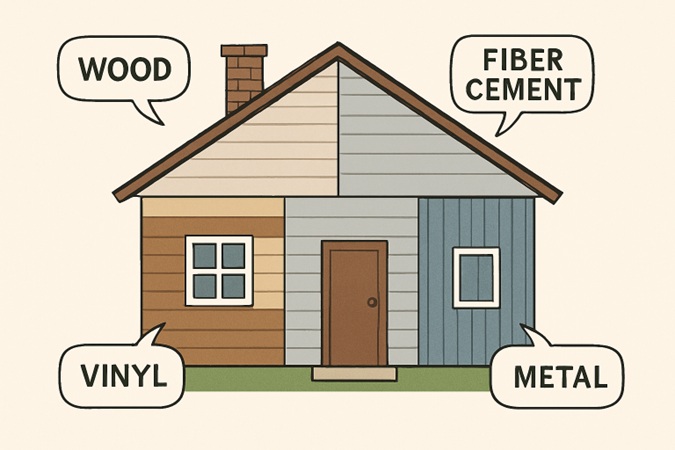
- Vinyl Siding: Popular for its affordability, color variety, and minimal maintenance. Suitable for most climates, but best suited for moderate temperature areas.
- Fiber Cement Siding: Resilient to moisture, fire, and pests—mimics wood or masonry at a lower cost and with less upkeep.
- Wood Siding: Unmatched natural beauty and versatility, but requires regular care to prevent weathering and decay.
- Metal Siding: Strong, contemporary look with excellent durability, fire resistance, and low maintenance, ideal for modern designs.
- Stone Veneer Siding: Luxurious appearance without the heavy installation or cost of full-stone exteriors. UV and weather resilient.
Installation & Warranty
Proper installation is crucial, regardless of the material you choose. Poor installation can compromise even the highest-quality siding, allowing drafts, leaks, and damage to occur. Hiring skilled, certified professionals ensures correct technique and adherence to local building codes. Furthermore, most reputable manufacturers offer extensive warranties on both siding materials and labor—read the fine print and register your warranty to safeguard your investment. Quality installation and a reliable warranty provide critical peace of mind for years ahead.
Selecting siding is a blend of function, style, and practicality. By assessing your climate, maintenance preferences, energy priorities, and financial goals, you can find the right fit for your home. Don’t hesitate to seek guidance from professionals and consult trusted resources to weigh your choices carefully and make informed, confident investments in your home’s future.