
Key Takeaways:
- Outdoor spaces are vulnerable to sun damage, affecting both comfort and property longevity.
- Simple changes and sun-safe strategies can dramatically increase protection.
- Innovations in materials and design offer effective, attractive solutions without sacrificing natural light.
- Creating shaded areas, utilizing UV-resistant products, and routine maintenance all play important roles.
- Proactive planning reduces repair costs and helps keep outdoor environments safer for everyone.
Why Sun Protection Matters For Outdoor Spaces
Protecting outdoor spaces from the sun is crucial for maintaining comfort and long-term property value. Ultraviolet radiation can wear down materials like wood, fabrics, plastics, and metal. Integrating sun-protective strategies can prevent costly repairs, preserve property appeal, and create a more enjoyable environment. South Florida retractable screens are a popular solution for outdoor shade, providing flexible coverage, reducing UV exposure, and maintaining an open aesthetic. These screens blend function and style, adapting to changing sun angles and user preferences, making them an investment in comfort and longevity.
Table of Contents
Common Outdoor Areas Prone To Sun Damage
Recognizing sun-vulnerable zones is crucial for creating a comprehensive protection plan. These include decks, balconies, patios, pool decks, and fencing. Unprotected areas can cause discoloration or warping of these structures. Outdoor soft furnishings, rugs, playground equipment, and garden structures are also susceptible to UV damage. South- and west-facing areas require special attention due to intense direct sunlight in the afternoon.
The Science Behind UV Exposure & Material Breakdown
Ultraviolet radiation, primarily in the form of UVA and UVB rays, is the chief culprit behind outdoor material degradation. When UV light penetrates surfaces, it disrupts the molecular structure of both organic and synthetic substances. This leads to faded colors, cracking, warping, and reduced material strength over time. According to research published by the Centers for Disease Control and Prevention (CDC), repeated UV exposure accelerates the rate of deterioration, making preventive interventions essential for asset longevity.
Shading Solutions: From Trees To Technology
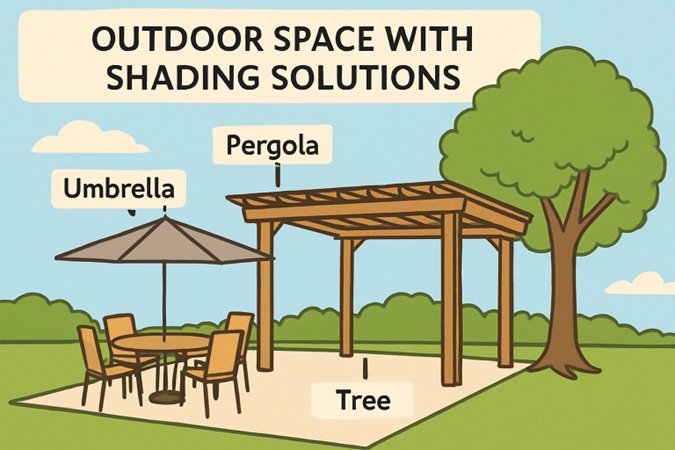
Sun protection is achieved through strategically placed shade, such as mature trees and hedges. However, these natural options take time to reach their full potential. Modern shading options, such as pergolas with adjustable louvers, retractable awnings, cantilevered umbrellas, and weather-resistant canopies, can be installed quickly and tailored to specific outdoor layouts, optimizing spaces and extending their usability.
 Choosing UV-Resistant Materials & Coatings
Choosing materials that can withstand the elements is a proactive way to reduce maintenance and replacement costs. UV-resistant materials like HDPE, powder-coated metals, and treated woods are popular choices. Advanced fabrics now come with fade-resistant dyes, ensuring color retention. Deck treatments and sealants have evolved to include sunscreen agents for wood, enhancing the weatherproofing of outdoor surfaces.
Routine Maintenance To Prevent Sun Wear & Tear
Regular maintenance fortifies your sun protection plan. Neglect can quickly turn minor sun damage into costly restoration projects. Establish a routine schedule that includes cleaning all surfaces to clear away dirt and debris, which can be abrasive and speed up wear. Reapply UV-protective sealants on wood and composite decking annually or as recommended by manufacturers. Inspect furniture and hardware for loose fasteners, warping, and color-fade; rotate or replace cushions and covers when necessary. By catching small issues early and addressing them promptly, you extend the life and appearance of all your outdoor assets.
Design Tips For Comfortable, Protected Spaces
Creating inviting, sun-safe outdoor environments often comes down to thoughtful design decisions. Start by positioning seating and play areas beneath natural or artificial shade wherever possible. Lighter-colored hardscaping and textiles reflect sunlight, keeping spaces cooler. Incorporate multi-functional items—such as planters that double as privacy or sun screens—to maximize utility. Outdoor rugs not only soften the space but also shield underlying surfaces from direct sunlight. Designers increasingly integrate these protective elements as part of cohesive, eye-catching outdoor living spaces, balancing comfort, protection, and style.
Staying Informed On Sunproofing Trends
Awareness of the latest innovations keeps your outdoor space both modern and protected. Developments in smart shading devices, passive cooling structures, and UV-reflective materials continue to expand the range of available solutions. Government initiatives and publications, such as those from the U.S. Department of Energy, offer valuable best practices for sun control that homeowners and professionals alike can follow. Stay connected with local experts and reliable industry publications to capitalize on emerging products and methods—ensuring your valuable outdoor areas remain vibrant, resilient, and usable for years to come.
Conclusion
Protecting outdoor spaces from sun damage isn’t just about preserving appearances—it’s about safeguarding comfort, durability, and long-term value. By combining smart shading solutions, UV-resistant materials, and consistent maintenance, homeowners can dramatically extend the lifespan of their decks, patios, furniture, and other outdoor features. Thoughtful design choices further enhance both function and style, creating inviting spaces that remain enjoyable throughout the seasons. With proactive planning and an eye on emerging sunproofing innovations, you can keep your outdoor areas vibrant, comfortable, and well-protected for years to come.

