

Key Takeaways:
- Smart irrigation systems utilize real-time data and automation to achieve precise water management.
- They significantly reduce water usage, promoting sustainability across residential and public landscapes.
- Technological innovations, such as AI and IoT, are revolutionizing the landscape maintenance landscape.
- Upfront costs and technical knowledge remain primary challenges for adoption.
- The growing adoption of these systems is projected to have a profound economic and environmental impact.
Table of Contents
Understanding Smart Irrigation Systems
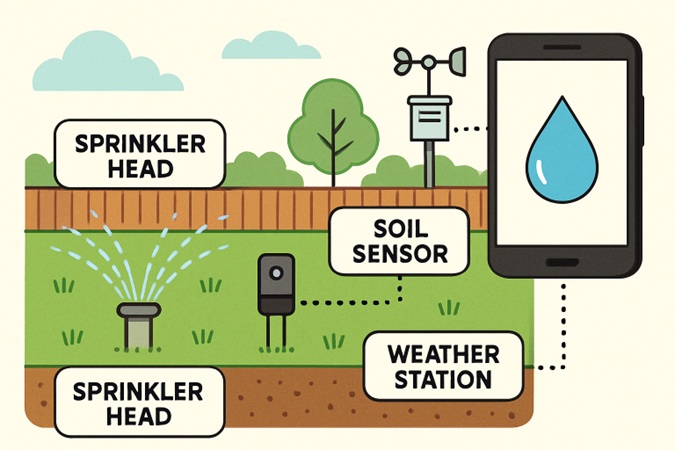
Water conservation globally requires smarter solutions, especially for outdoor landscapes. Modern irrigation services increasingly rely on smart irrigation technologies that offer higher efficiency for both homeowners and landscape managers. Unlike traditional sprinkler systems with fixed schedules, these systems adjust watering based on soil moisture sensors, local weather data, and automated controls, ensuring precise water use and healthier plant growth. By incorporating real-time forecasts and site-specific soil conditions, smart irrigation helps prevent over-watering and runoff, supporting sustainable landscape practices and improved water management worldwide.
 Key Features & Benefits
Modern precision watering solutions, including advanced irrigation systems, utilize predictive data and real-time readings to deliver the optimal amount of water tailored to each plant’s specific needs. This approach significantly conserves water, with smart scheduling capable of reducing usage by up to 50%. This reduction positively impacts monthly utility expenses while helping to safeguard shared water resources. Automated detection of leaks and clogs further minimizes maintenance demands, streamlining overall landscape management. As a result, these irrigation systems promote healthier plants through consistent, stress-free watering, leading to greener, more resilient, and visually vibrant landscapes.
Technological Innovations In Smart Irrigation
Recent years have seen rapid advancements in irrigation technology driven by AI and IoT, which analyze climate data, soil health, and seasonal changes to optimize watering schedules. AI systems learn local microclimates and predict plant needs, while IoT sensors allow remote monitoring and control. An example is a pilot project utilizing IoT and AI to develop a smart irrigation platform, which saves water and reduces maintenance costs.
Applications In Various Landscapes
Smart irrigation systems are versatile and suitable for a wide range of landscape types. In residential gardens, they offer homeowners convenience and cost savings while maintaining healthy and attractive outdoor spaces. For parks and public spaces, municipalities utilize these systems to maintain vibrant community areas without incurring high costs or wasting water. In golf courses, precise irrigation control helps keep the greens lush and playable while simultaneously lowering overall maintenance expenses.
Economic & Environmental Impact
The adoption of smart irrigation systems delivers measurable benefits at individual, community, and environmental levels. By reducing water waste, property owners save substantially on water bills and contribute to broader conservation goals. On a larger scale, cities and towns benefit from decreased pressure on municipal water systems—an outcome that’s especially urgent amid growing concerns about drought and climate volatility. Research published by the U.S. Environmental Protection Agency highlights the significant decrease in outdoor water consumption achieved through the use of smart irrigation controllers, resulting in long-term resource protection.
Challenges & Considerations
Smart irrigation systems represent a significant advancement in agricultural technology, but they come with specific challenges. The initial investment for these systems can be substantially higher than that of traditional irrigation methods, which may deter some users despite the long-term savings they offer. Additionally, the technical complexity involved in their setup and ongoing operation often requires specialized knowledge or professional assistance. Furthermore, as these systems increasingly rely on connectivity and data sharing, users must be vigilant about data privacy, ensuring their information is adequately protected and managed.
Future Trends In Smart Irrigation
The future of smart irrigation involves more AI, better interfaces, and automation. As machine learning advances, systems become easier to use for all, with customizable apps, cloud dashboards, and diagnostics simplifying management. Combined with environmental education, these systems will help create resilient cities, safeguard water quality, and promote sustainable landscaping for future generations.
Conclusion
Smart irrigation systems are a practical, forward-looking way to manage water responsibly across various landscapes. Using sensors, automation, AI, and IoT, they deliver precise watering to support plant health and reduce waste. Suitable for residential, commercial, and public spaces, they offer economic and environmental benefits. Despite challenges like costs and technical complexity, innovation and better access are lowering these barriers. As water scarcity and climate change grow, smart irrigation provides a scalable, efficient, and sustainable solution vital for modern landscape management.