
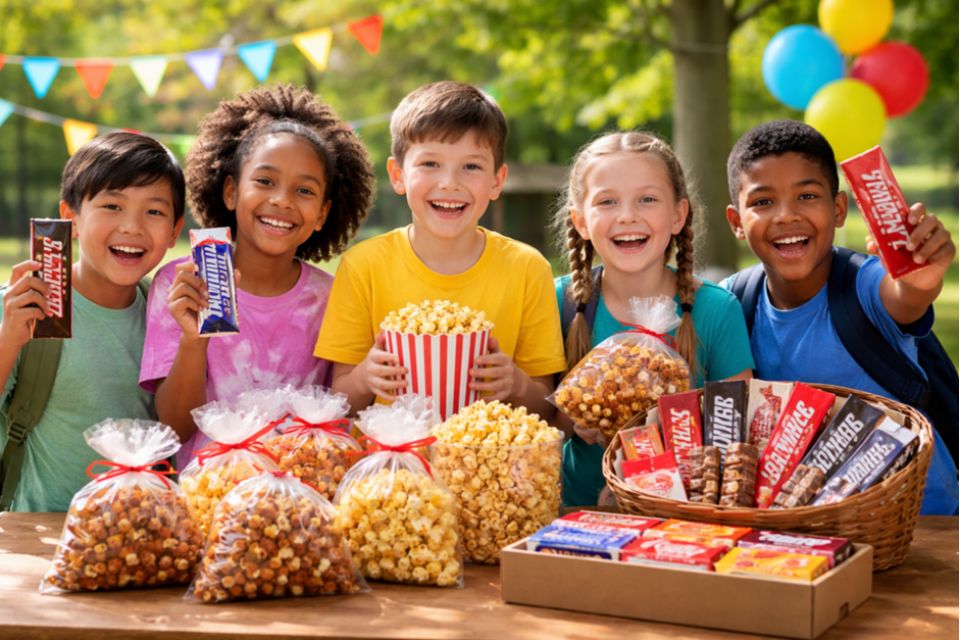
Fundraising plays a vital role in supporting school programs, extracurricular activities, and community initiatives. From financing field trips to upgrading classroom resources, schools often rely on creative and practical fundraising methods to meet their goals. Among the most popular options are popcorn fundraisers and Candy bar fundraisers, both of which have stood the test of time due to their simplicity, affordability, and wide appeal.
However, choosing the right approach—or combining multiple strategies—requires careful planning. Schools must evaluate factors such as profit margins, student engagement, community preferences, and logistical challenges. This article explores how schools can effectively use these fundraising methods while balancing trade-offs and making informed decisions that benefit both students and the wider community.
Table of Contents
Understanding Why Product-Based Fundraising Works
Product-based fundraising remains one of the most accessible and effective methods for schools. Unlike donation-based campaigns, it offers supporters a tangible return, making them more likely to participate. Items like snacks and treats are particularly appealing because they are affordable, easy to sell, and widely enjoyed.
Both snack-based fundraising approaches succeed because they:
- Require minimal upfront investment
- Are easy for students to promote
- Appeal to a broad demographic
- Provide quick returns compared to event-based fundraising
Despite these advantages, success depends on how well the campaign is executed. Schools must consider their audience, timing, and overall strategy to maximize results.
Evaluating Snack-Based Fundraising Options
Snack-focused campaigns are popular because they tap into everyday consumer behavior. However, not all approaches deliver the same results. Schools must evaluate which products align best with their audience and fundraising goals.
Popcorn-Based Campaigns
Popcorn remains a versatile and popular fundraising product. With a variety of flavors and packaging options, it appeals to both children and adults. Additionally, it is often perceived as a lighter snack option, making it suitable for health-conscious buyers.
Using popcorn fundraising ideas allows schools to:
- Offer multiple flavor options to increase sales
- Create themed campaigns around holidays or events
- Sell at school functions, sports games, or community gatherings
However, there are trade-offs to consider. While popcorn can yield higher profit margins, it may require more coordination in terms of packaging, storage, and distribution. Freshness is also a factor, especially for pre-packaged varieties.
Candy-Based Campaigns
Candy sales are among the simplest and most straightforward fundraising options. A chocolate bar fundraiser typically involves selling pre-packaged items with clear pricing, making it easy for students to participate.
This approach offers several advantages:
- Low complexity and minimal setup
- Predictable pricing and profit margins
- Strong impulse-buy appeal
On the other hand, fundraising candy sales can face challenges related to health concerns and dietary restrictions. Some schools may also encounter resistance from parents or administrators who prefer healthier alternatives.
Key Factors That Influence Fundraising Success
Choosing between different fundraising methods—or combining them—requires a deeper understanding of the factors that influence outcomes.
1. Audience Preferences
Understanding the preferences of students, parents, and the local community is essential. For example:
- Younger students may find it easier to sell candy due to its universal appeal
- Adults may prefer gourmet or flavored snack options
- Health-conscious communities may respond better to lighter snack choices
Conducting a simple survey or gathering feedback can help schools tailor their campaigns more effectively.
2. Profit Margins Vs. Effort
Different fundraising methods offer varying levels of profitability and effort.
- Popcorn-based campaigns often provide higher margins but require more organization
- Candy sales are easier to manage but may generate lower overall profits per item
Schools must decide whether they prefer a high-effort, high-reward approach or a simpler, more predictable model.
3. Logistics & Distribution
Logistical considerations can significantly impact the success of a campaign. These include:
- Storage requirements
- Delivery timelines
- Inventory management
For example, popcorn fundraising may involve bulk orders and distribution planning, while candy sales typically rely on pre-packaged boxes that are easier to handle.
4. Student Engagement
The success of any school fundraiser depends heavily on student participation. Campaigns that are easy to understand and execute tend to generate higher engagement.
Candy-based campaigns often excel in this area due to their simplicity. However, popcorn fundraising can be equally engaging when paired with creative themes, competitions, or incentives.
5. Timing & Seasonality
The timing of a fundraiser can influence its success. Seasonal factors, holidays, and school events all play a role.
- Fall and winter months may favor warm, comfort-based snacks
- Spring events may benefit from lighter, shareable products
- School events such as sports games or fairs provide excellent selling opportunities
Careful planning ensures that the chosen fundraising method aligns with the time of year and audience demand.
Trade-Offs Between Different Approaches
No fundraising method is without its trade-offs. Schools must balance competing priorities to achieve the best results.
Simplicity Vs. Customization
Candy-based campaigns are straightforward and require minimal customization. This simplicity makes them easy to implement but limits creativity.
Popcorn-based campaigns, on the other hand, allow for greater customization in flavors, packaging, and marketing. However, this flexibility comes with increased complexity.
Health Considerations Vs. Popularity
While candy is highly popular, it may raise concerns about sugar consumption and nutrition. Schools must weigh these concerns against the potential for higher sales.
Popcorn offers a middle ground, especially when marketed as a lighter snack option. However, flavored varieties may still include added sugars or ingredients that require consideration.
Short-Term Gains Vs. Long-Term Engagement
Some fundraising methods generate quick results but may not sustain long-term engagement. Candy sales, for example, often produce immediate returns but may become repetitive over time.
Popcorn fundraising, with its potential for variety and creativity, can help maintain interest across multiple campaigns. However, it requires more effort to keep campaigns fresh and engaging.
Challenges Schools May Face
Even well-planned fundraising campaigns can encounter challenges. Understanding these potential obstacles allows schools to prepare and adapt.
Volunteer Coordination
Fundraisers often rely on volunteers, including teachers, parents, and students. Coordinating schedules and responsibilities can be difficult, particularly for larger campaigns.
Inventory Management
Overestimating demand can lead to excess inventory, while underestimating can result in missed opportunities. Accurate forecasting is essential for success.
Competition With Other Fundraisers
Schools often run multiple fundraising campaigns throughout the year. Competing initiatives can reduce participation and overall effectiveness.
Community Fatigue
Frequent fundraising efforts may lead to donor fatigue. Schools must balance the frequency of campaigns to avoid overwhelming their community.
Strategies For Maximizing Effectiveness
To overcome these challenges and achieve better results, schools can adopt several strategic approaches.
Combining Multiple Fundraising Methods
Rather than choosing a single approach, schools can combine different methods to diversify their efforts. For example:
- Running both snack-based campaigns simultaneously
- Offering bundled deals to increase sales
- Targeting different audiences with different products
This approach helps mitigate risks and maximizes overall revenue.
Leveraging Digital Promotion
Online tools and social media platforms can significantly enhance fundraising efforts. Schools can:
- Share campaign updates
- Highlight student participation
- Reach a broader audience beyond the local community
Digital promotion also makes it easier for supporters to engage with the campaign.
Incentivizing Participation
Motivating students is key to success. Incentives such as prizes, recognition, or friendly competitions can boost participation and sales.
Focusing On Community Impact
Communicating the purpose of the fundraiser is essential. When supporters understand how their contributions will benefit students, they are more likely to participate.
The Importance Of Thoughtful Decision-Making
Choosing the right fundraising strategy requires careful consideration of multiple factors. Schools must evaluate their goals, resources, and community dynamics before making decisions.
It is important to consider:
- The financial impact of each method
- The level of effort required
- The potential benefits for students and the community
By taking a balanced approach, schools can ensure that their fundraising efforts are both effective and sustainable.
Final Thoughts
Fundraising is an essential part of supporting educational initiatives, and snack-based campaigns remain among the most effective options available. By understanding the strengths and limitations of different approaches, schools can make informed decisions that align with their goals.
Whether focusing on simplicity, profitability, or community engagement, the key to success lies in thoughtful planning and execution. By carefully balancing trade-offs and addressing potential challenges, schools can create fundraising campaigns that not only generate revenue but also foster a sense of collaboration and shared purpose within their community.
Ultimately, the most effective fundraising strategy is one that reflects the unique needs and values of the school, ensuring long-term success and meaningful impact.