
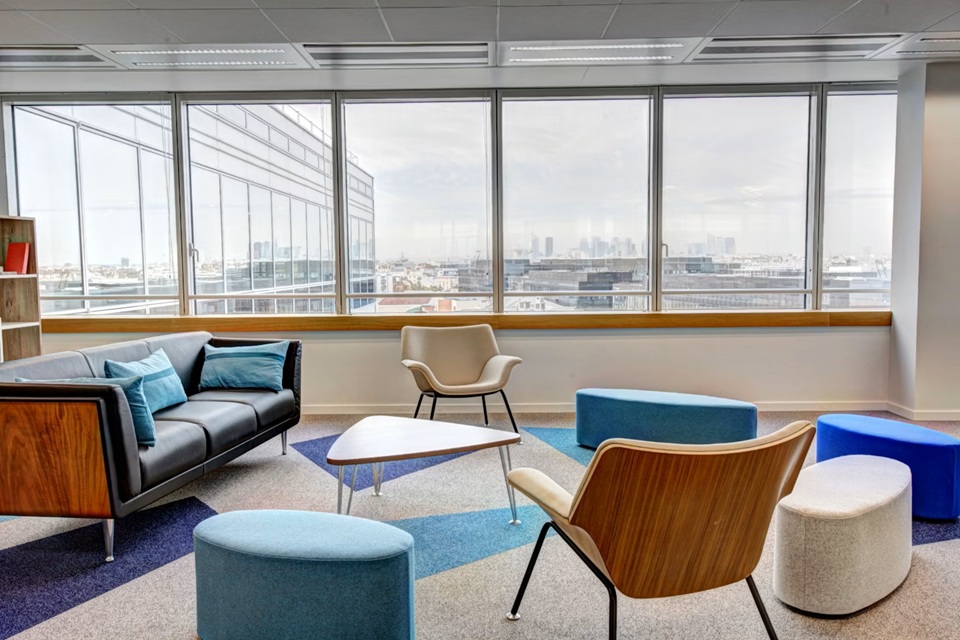
Urban spaces were once designed with permanence in mind—office buildings locked into 30-year leases, retail stores with fixed inventories, homes built for single-function family life. Cities today are moving targets, shaped by fast-changing demands and short attention spans.
People no longer occupy space the way they used to. Remote work is a big factor behind this. In 2024, 40% of workers reported working at least part-time remotely, while 54% said flexible work models ranked among the top three reasons for switching jobs.
It’s not enough for a space to be functional. It has to be adaptable. Thus, let’s look at three key reasons why flexibility has become the guiding principle for the next chapter of urban development.
Table of Contents
The Death Of The One-Purpose Building
Cities are quietly phasing out the concept of buildings that serve only one function. As data suggests, U.S. office vacancy hit 19.4% in August 2024, and office-to-residential conversions surged 357% over 2021 levels, with up to 1.38 billion sq ft of office space planned for conversion across major cities.
In other words, an office complex can no longer afford to sit empty on weekends. A parking lot isn’t just for cars anymore—it might double as a weekend flea market or an outdoor film venue. The underlying asset hasn’t changed, but the way it creates value has.
This shift goes beyond trendy co-working spaces or rooftop cafes. Developers are starting to consider how a single square foot can serve multiple purposes in a single day. Residential units with convertible walls, retail stores with plug-and-play infrastructure, and community centers designed for after-hours revenue—all reflect a growing preference for modular thinking.
Cities thrive when buildings respond to people’s needs, not just their categories. A school gym becomes an emergency shelter. A hotel transforms into long-term housing. Landlords are being forced to become strategic operators, maximizing utility through elasticity rather than expansion.
The Experiential Economy Is Space-Hungry
There’s a growing appetite for physical experiences that can’t be duplicated online. Social media plays a role, of course—but the desire goes deeper. People want spaces that tell stories, spark creativity, and feel momentary enough to be memorable. What used to be considered “temporary” now signals exclusivity and relevance.
The urban consumer is less interested in ownership and more interested in curated access. That means physical spaces are increasingly being used to create one-off encounters—immersive art shows, pop-up retail installations, underground dining, and brand activations. These events demand flexible venues that can pivot quickly and present well across various uses.
You’ll find everything from rooftop yoga classes to creative brand exhibits in places designed to be transformed overnight. One day it’s a product launch, the next it’s a film screening or networking event. This is already the norm in areas like Manhattan. According to The Farm Soho, buildings are being used for anything from yoga classes to dinner parties.
The same buildings that advertise as ‘Soho event space rental venues’ may also double up as a conference space at other times. It makes perfect sense. Why have a separate building solely dedicated to something like event rental spaces and miss out on other opportunities?
This is not just limited to big cities in America. Even in cities like London, 10% of the office market is now dedicated to flexible workspace. That represents a 4% increase from 2019.
Flexibility De-Risks Investment
It’s not just tenants who crave flexibility—investors do too. In a post-2020 world defined by economic whiplash, rigid real estate models have become a liability. Buildings designed for only one use or tenant type can become stranded assets when demand shifts. On the other hand, flexible spaces offer landlords and developers something increasingly rare: agility.
A modular layout means quicker turnarounds between leases. Mixed-use zoning opens the door to multiple revenue streams. And plug-and-play infrastructure reduces the downtime between occupancies. This is becoming more important, particularly due to recent trends in office construction.
CNBC recently highlighted data that shows, for the first time in 25 years, more office space was being razed or converted than being built. To be specific, 23.3 million sq ft of office space will be demolished or converted, while only 12.7 million sq ft of new office construction will be completed.
Flexibility is becoming a risk management tool. It allows property owners to pivot with shifting demographics, technological disruptions, or even global events. Instead of betting on one use case, flexible design spreads the risk across many. In this way, adaptability isn’t just smart design, it’s a sound investment strategy.
Frequently Asked Questions
1. What are the four types of real estate?
Real estate falls into four main types: residential (homes and apartments), commercial (offices, malls), industrial (warehouses, factories), and land (vacant plots, farms). Each has its own risk and return profile, and people invest in them based on their goals and expertise.
2. Who owns the most office real estate?
In the U.S., big institutional players like Brookfield, Blackstone, and Boston Properties own massive office portfolios. Globally, sovereign wealth funds and pension funds also hold large chunks. These groups buy office towers because they can afford the long game—even if markets get shaky.
3. Who uses co-working space?
Co-working isn’t just for freelancers anymore. It’s used by startups, remote employees, small teams from big firms, and even creatives like designers or podcasters. Basically, anyone who needs flexibility without the headache of a traditional lease ends up finding value in co-working setups.
The future favors properties that can adapt at the speed of culture. Static buildings might still exist, but their influence is shrinking in a world that rewards movement, experimentation, and moment-based value.
As developers, tenants, and cities themselves reconsider what a “space” can and should be, flexibility will be the competitive edge.